
Overview
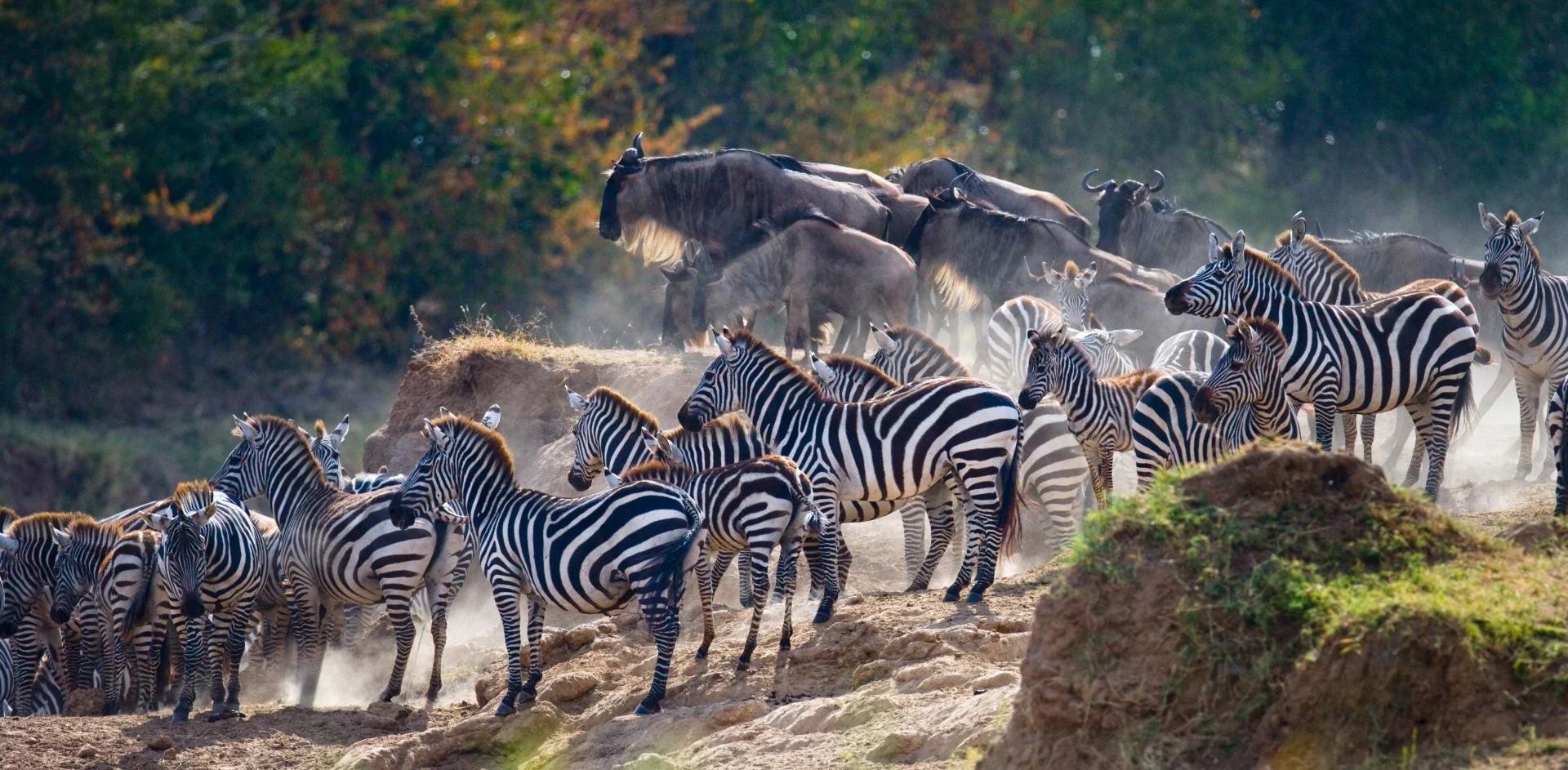
This seven-day journey links the three signature landscapes of Northern Tanzania into one unhurried circuit: the elephant herds and giant baobabs of Tarangire, the enclosed grassland floor of the Ngorongoro Crater, and the endless plains of the Serengeti. The route begins and ends in Arusha, so arrival and departure logistics stay simple, and every long transfer doubles as a game-viewing drive rather than dead mileage.
The pacing is deliberate. Rather than sprinting between gates, the itinerary places two full nights in the Serengeti and a dedicated highland night before the crater descent, which means guests are on the ground at the hours when wildlife is genuinely active. All park drives are conducted in a private 4×4 safari vehicle with a pop-up roof, led by an English-speaking professional guide who stays with the group from arrival to departure
DURATION
10 days / 9 nights
DESTINATIONS
Tarangire National Park · Karatu · Ngorongoro Crater · Central Serengeti · Stone Town · Paje, Zanzibar
BEST TIME TO TRAVEL
June to October for prime game viewing and dry-season beaches; December to February for calving season and warm, calm seas
TRIP STYLE
Private guided safari, light-aircraft transfer, beach and culture stay
GROUP SIZE
Private departure – 2 to 6 guests, one vehicle and one guide throughout the safari
Day-by-Day Itinerary
Day 1: Arrival in Tanzania and transfer to Arusha
Upon your arrival at Kilimanjaro International Airport, you’ll be greeted and transferred to Arusha town. Meet your driver guide, who will brief you on your upcoming safari. Afterward, you can rest and prepare for your adventure.
- Meals included: dinner (if arriving early enough) or breakfast on the following day
- Overnight: Arusha, in a lodge or hotel in or near the town
- Drive time: approximately 1 hour from Kilimanjaro Airport, 20 minutes from Arusha Airport
- Optional on request: a night game drive or an evening at a coffee estate on the slopes of Mount Meru
Day 2: Tarangire National Park, then Karatu
After an early breakfast, the group departs for Tarangire National Park, about two hours’ drive along the Great North Road through Maasai and Chagga farmland.
Tarangire is often described as the park of giants, and rightly so: it holds one of the densest elephant populations in Tanzania, and in the dry season herds of a hundred or more animals gather along the Tarangire River and in the marshy Silale Swamp. The landscape is distinctive — rolling golden grassland studded with ancient baobabs, and termite mounds that serve as lookout posts for dwarf mongooses.
The day is spent on a full game drive with a picnic lunch under the trees at a designated site, before leaving the park in the late afternoon and climbing through the highlands to Karatu. The drive to Karatu takes about an hour and a half, rising onto the edge of the Ngorongoro highlands; the air here is noticeably cooler and greener than the plains, and the farmland around the town isworked by the Iraqw people.
- Highlights: large elephant herds, baobabs, lion, leopard, giraffe, buffalo, wildebeest, zebra and over five hundred recorded bird species
- Meals included: breakfast, picnic lunch, dinner
- Overnight: Karatu, at a lodge or farmhouse stay on the highland escarpment
- Drive time: Arusha to Tarangire about 2 hours; Tarangire to Karatu about 1 hour 30 minutes
- Note: the group should be ready for an early start the following morning, as the crater descent is best done first thing
Day 3: Ngorongoro Crater descent, then transfer to the central Serengeti
This is the day the trip was built around. Guests leave Karatu before dawn and drive up to the Ngorongoro Conservation Area and the crater rim, reaching a viewpoint over the caldera as the mist lifts off the crater floor. The Ngorongoro Crater is the largest intact volcanic caldera on earth, roughly nineteen kilometres across and six hundred metres deep, and it is the only place on the northern circuit where the whole cast of East African wildlife can be seen in a single morning.
Because every animal in the crater is enclosed by the same wall, the game viewing is unusually reliable. After the descent, a steep, switch-backed track down the inner wall, the group spends the morning on the crater floor. A good four to five hours usually turns up black-maned lion, large tusked elephant bulls, black rhino, hippo pools, flamingos on Lake Magadi, and spotted hyena.
A picnic lunch is taken at the Ngoitokitok Springs picnic site alongside the hippo pool before the ascent. Leaving the crater mid-afternoon, the vehicle crosses the Ngorongoro Conservation Area and enters the Serengeti through the Naabi Hill gate, arriving at the central Serengeti camp in time for sunset. The drive takes about three hours from the crater rim, and along the way the landscape opens into the short-grass plains where the wildebeest migration passes between roughly December and June.
- Highlights: caldera viewpoint at dawn, black rhino, black-maned lion, flamingos on Lake Magadi, hippo pool picnic, entry into the Serengeti through Naabi Hill.
- Meals included: breakfast, picnic lunch, dinner
- Overnight: central Serengeti, in a tented camp or lodge in the Seronera valley area
- Drive time: Karatu to crater rim about 45 minutes; crater floor and ascent about 6 hours; crater to central Serengeti about 3 hours
Day 4: Central Serengeti, full-day game drive
The first full day in the Serengeti is given over to exploring the Seronera valley, the heart of the central park. The Seronera River and its tributaries keep water in the landscape year round, which is why this area holds resident lion prides, leopard and cheetah when the migratory herds are elsewhere. The terrain here is a mix of open plains, riverine forest and the granite outcrops
known as kopjes, where leopards drape themselves over the warm rock in the afternoon.
The guide will shape the day around what the group most wants to see. A typical pattern is an early departure with coffee and a light snack, a long morning tracking predators, a hot lunch back at camp, and a second drive in the late afternoon and early evening when the light softens and the cats begin to move. This is also the day on which a hot-air balloon flight can be arranged as an optional extra: a pre-dawn launch over the plains with a champagne bush breakfast afterwards, and a game drive home.
- Highlights: Seronera River valley, leopard in the kopjes, resident lion prides, cheetah on the plains, hippo pools, superb birdlife
- Meals included: breakfast, lunch, dinner
- Overnight: central Serengeti camp or lodge
- Optional extra: sunrise hot-air balloon flight with bush breakfast, subject to advance booking and weather
Day 5: Central Serengeti: Seronera River and Moru Kopjes
The second Serengeti day takes the group further from the airstrip and into quieter country. The route typically runs south and west toward Moru Kopjes, a chain of granite outcrops where there is a genuine chance of finding the rare black rhino, and where the kopjes carry rock paintings and the Maasai caves and gong stones of the Serengeti’s older human history. The open grasslands and acacia woodland around Moru and the Ndutu area are also classic cheetah country.
Alternatively, if the migration is in the central or northern Serengeti at the time of travel, the guide may instead push north toward the Grumeti and Mara river systems, where river crossings take place between roughly July and October – a decision made on the ground once the group’s guide has current reports from the park. The afternoon returns to camp with time to rest, swim or photograph before dinner.
- Highlights: Moru Kopjes and Maasai rock art, black rhino and cheetah country, the potential for early-migration activity in the extended plains
- Meals included: breakfast, picnic or camp lunch, dinner
- Overnight: central Serengeti camp or lodge
- Note: the day’s route is flexible and confirmed by the guide on the morning, based on recent wildlife movement
Day 6: Serengeti morning drive and flight to Zanzibar
The morning begins with a final dawn game drive in the Serengeti, normally returning to camp for a late breakfast and a relaxed check-out. The group is then transferred to the Seronera airstrip for the scheduled light-aircraft flight to Zanzibar. Seronera is the main airstrip of the central Serengeti, and the route to Zanzibar is served by scheduled safari-aircraft operators with daily
departures, most commonly around eleven o’clock in the morning and taking between an hour and a half and an hour and forty-five minutes.
On landing at Zanzibar International Airport, guests are met and driven to their Stone Town hotel, a transfer of about fifteen to twenty minutes. Depending on the arrival time, the late afternoon can be spent walking the seafront at Forodhani Gardens, watching the dhow fleet return and the
food stalls set up at dusk, before a rooftop dinner looking over the harbour.
- Highlights: final Serengeti dawn drive, the aerial view over the Serengeti and the East African coast, first evening in Stone Town
- Meals included: breakfast, dinner (lunch on board the flight or a packed lunch from camp)
- Overnight: Stone Town, in a boutique hotel in the historic quarter
- Flight details: Seronera (SEU) to Zanzibar (ZNZ), approximately 645 km and about 1 hour 40 minutes
Day 7: Stone Town, Prison Island and the Nakupenda sandbank
The first full island day begins with a guided walking tour of Stone Town, a UNESCO World Heritage Site and one of the last surviving functioning Swahili coastal trading towns in the world. The walk takes in the Old Fort, the House of Wonders, the former slave market and its memorial church, the Anglican cathedral, the Darajani market and the carved doors and narrow lanes of the
old town, with the guide explaining the Omani, Indian, Arab and European layers that built the city.
From the Stone Town waterfront the group boards a boat for Prison Island, or Changuu Island, twenty-five minutes offshore. The island was built as a prison that was never used for that purpose and later served as a quarantine station; today its main residents are a colony of giant Aldabra tortoises, some of them more than a century old, and there is a short reef walk and snorkelling opportunity on the island’s edge.
The boat then continues to the Nakupenda sandbank, a speck of white sand that appears at low tide in the middle of a turquoise sea, ringed by clear, shallow water. Lunch is a Swahili seafood barbecue served on the sand — grilled fish, calamari, prawns, spiced rice and tropical fruit — followed by time to swim and snorkel before the return to Stone Town in the late afternoon.
- Highlights: Stone Town heritage walk, Changuu Island giant tortoises, snorkelling, Nakupenda sandbank picnic and seafood barbecue
- Meals included: breakfast, seafood lunch on the sandbank, dinner
- Overnight: Stone Town
- Practical notes: reef shoes and a hat are worth packing; the sandbank has no shade and no facilities
Day 8: Jozani Forest, spice farm and transfer to Paje
After breakfast the group checks out of Stone Town and heads south-east through the island’s interior, first to Jozani Chwaka Bay National Park, the last remaining refuge of the endemic Zanzibar red colobus monkey. The forest walk, with a local ranger, takes in the mangrove boardwalk and the impressive stands of mahogany and eucalyptus; the colobus troops are
habituated and are usually seen within the first twenty minutes.
The morning continues at a working spice farm, where a guide leads a walk through the cultivated plots and explains the plants behind cloves, cinnamon, nutmeg, cardamom, vanilla, black pepper, turmeric and lemongrass. Zanzibar was once the world’s largest producer of cloves, and the visit includes tasting fresh fruit in season, a demonstration of how spices are harvested and processed, and the traditional climbing of a coconut palm. Lunch is taken at the farm or en route.
The afternoon brings the group to Paje on the south-east coast, about an hour and a half from Stone Town. Check-in is followed by time on the beach at the best tidal window of the day – Paje’s lagoon is wide and shallow, sheltered by the reef, and the colours of the water at low tide are the ones the postcards are made of.
- Highlights: Zanzibar red colobus monkeys at Jozani, mangrove boardwalk, spice farm tour with tasting, transfer to the south-east coast
Meals included: breakfast, lunch, dinner - Overnight: Paje, at a beach hotel or boutique bungalow
- Drive time: Stone Town to Jozani about 45 minutes; Jozani and the spice farm to Paje about 1hour 30 minutes in total
Day 9: Paje: kite surfing, lagoon and The Rock
The final full day is spent on and around Paje, and it is the most flexible day of the trip. Paje is the island’s kite-surfing capital: the wind season runs roughly from June to September and again from December to February, the lagoon is shallow and flat for beginners, and several established schools on the beach run two- to three-hour introductory courses with equipment included.
Guests staying outside the windy season can instead take a clear kayak or stand-up paddleboard out over the seagrass flats. Alternatives for the day include a dive or snorkelling trip from the south-east coast, where the reef
lies close to shore, a swim in the freshwater Kuza Cave, a walk through Paje village with a locally guided visit to the seaweed farms, or a horse ride on the beach at low tide. In the late afternoon, a traditional dhow cruise along the coast and into the sunset is the fitting way to close the beach stay.
Lunch or dinner at The Rock, the famous restaurant perched on a boulder in the sea just off Michamvi, is worth arranging in advance — it is about thirty minutes north of Paje and reachable on foot at low tide. The evening is otherwise free, at the hotel or on the beach.
- Highlights: kite-surfing lesson or paddling in the lagoon, reef snorkelling or diving, Kuza Cave, village and seaweed-farm walk, sunset dhow cruise, The Rock restaurant
- Meals included: breakfast, lunch, dinner
- Overnight: Paje
- Note: any of the above can be reserved in advance through the guide, and the day can also
simply be left free for the beach
Day 10: Departure from Zanzibar
The last morning is left unhurried, with breakfast at the hotel and time for a final swim or a walk along the beach before check-out. Depending on the departure time, guests can fit in a last visit to the Paje market or a short stop in Stone Town for shopping and coffee on the way to the airport.
The transfer to Zanzibar International Airport takes approximately one hour and fifteen minutes from Paje, or about twenty minutes if the route passes through Stone Town. Guests are accompanied to the airport and assisted with check-in for the international flight, bringing the ten-day journey to a close.
- Meals included: breakfast
- Departure point: Zanzibar International Airport (ZNZ)
- Note: guests on late-night departures may be able to arrange a day-use room or a late check-out; this should be requested at the time of booking